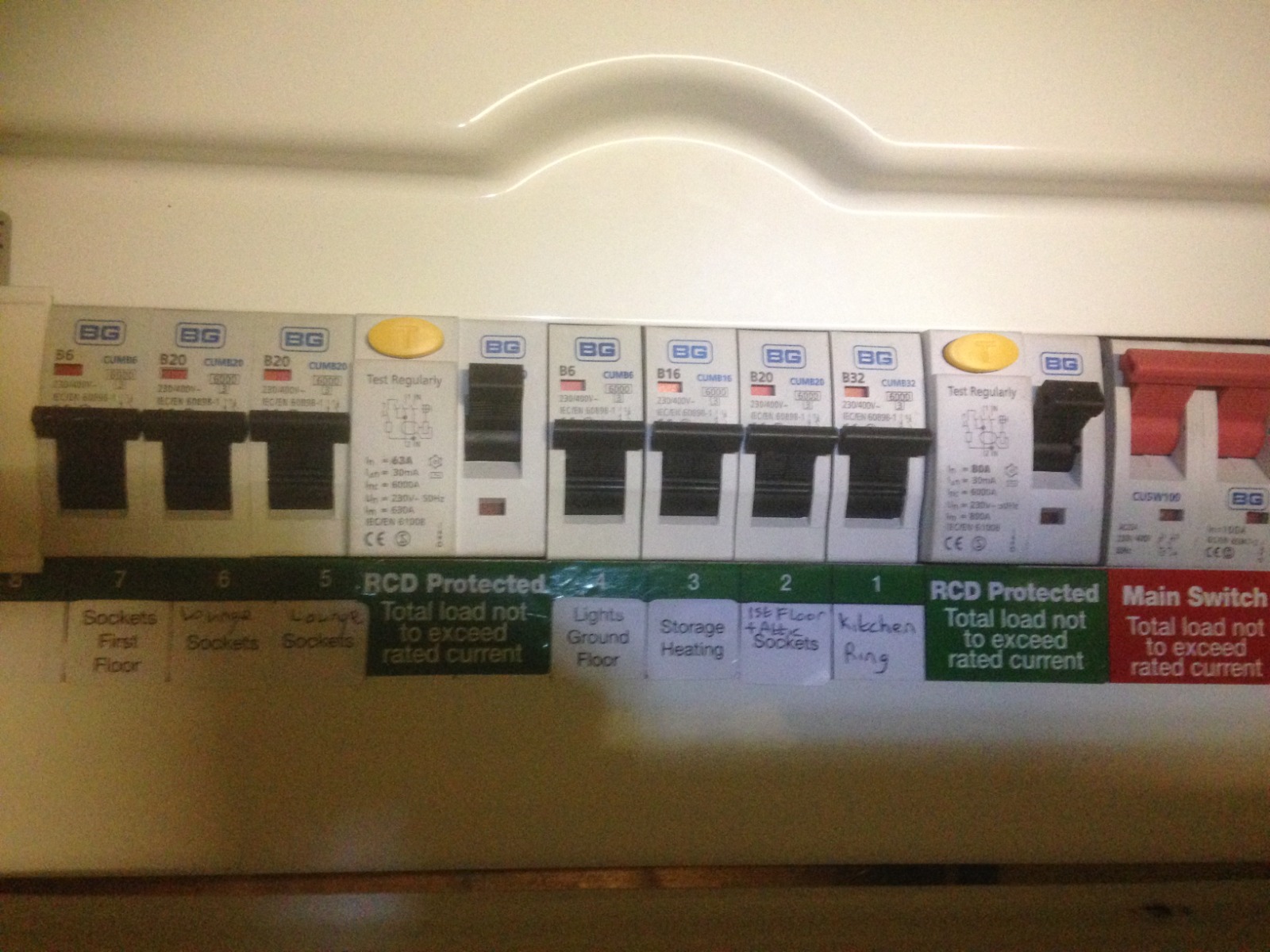
I was recently called to the home of a regular customer because her electricity kept going off.
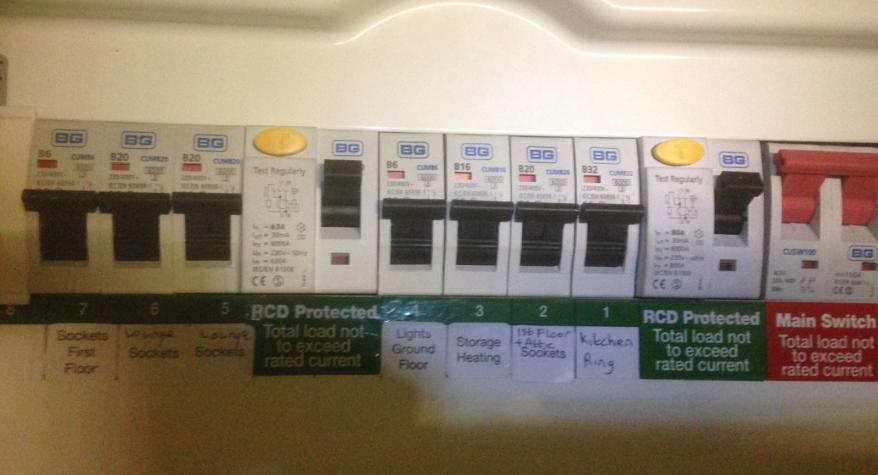
On arrival, it became clear quite quickly that the existing split-board consumer unit was no longer well suited to the way the property was being used.
The plastic split board had evolved over the years as more electrical equipment had been added to the house.
One side of the board was protected by an 80A RCD and was supplying a converted garage.
I had actually visited the property before the garage conversion took place.
The plan was to turn the garage into a teenager’s bedroom with its own shower and bathroom.
At the time, I recommended that the conversion should have its own properly designed electrical supply and its own consumer unit.
I also advised that the existing Type AC RCD protection needed reviewing and that suitable Type A protection should be considered because of the amount of modern electronic equipment likely to be connected.
What Had Changed in the Property?
By the time I was called back, the garage was no longer just a garage.
It had become a bedroom and digital music-creation space for a teenager and his friends.
That meant computers, digital music equipment, amplifiers, power supplies, chargers and other electronic devices were all being used in the same area.
The electrical demand on the original installation had changed considerably.
But the bigger issue was not simply how much equipment was being used.
It was the amount of leakage current being produced by all of that modern electronic equipment.
What Was Making the RCD Trip?
Modern electrical equipment can naturally produce small amounts of earth leakage current.
One computer may contribute a little.
A digital amplifier may contribute a little more.
Then there are chargers, televisions, LED lighting, power supplies and other electronic devices.
On their own, each circuit may be perfectly healthy.
But on a split board, several circuits share the same 30 mA RCD.
The leakage from all of those circuits adds together.
This is known as cumulative earth leakage.
Eventually, enough leakage can build up for the shared RCD to operate even though there may not be one single obvious fault.
In this particular property, the amount of electronic music equipment being used in the converted garage was enough to make the problem much worse.
That was one of the reasons the customer was seeing repeated tripping.
Why Was the Type AC RCD a Concern?
There was another issue too.
The split board was using Type AC RCD protection.
Modern electronic equipment can produce DC components in the residual current.
A Type AC RCD is designed mainly for sinusoidal AC residual currents.
DC components from modern electronics can affect its operation and, in some circumstances, can desensitise or blind the RCD so that it may not respond correctly when a genuine fault occurs.
That was a concern for me because the same RCD was protecting several circuits, including the converted garage, bathroom and shower area.
The RCD was still operating and tripping, but that did not mean it was the type of protection I would choose for a modern installation containing this amount of electronic equipment.
For me, this was another example of how much domestic electrical installations have changed.
Why I No Longer Install Split-Board Consumer Units
Before around 2020, split boards were my normal go-to choice for many domestic consumer unit upgrades.
They were cheaper, widely used and were a common way of providing RCD protection across several circuits.
My view has changed.
I no longer install split-board consumer units.
There are two main reasons.
Firstly, if several circuits share one RCD and just one circuit develops a fault, the shared RCD can switch off several healthy circuits at the same time.
Secondly, all the normal earth leakage from those circuits accumulates on the same RCD.
That can increase the likelihood of unwanted tripping.
With individual RCBOs, each circuit has its own residual-current and overcurrent protection.
So if one circuit develops a fault, that circuit should be the one that disconnects.
And the normal leakage from one circuit is not being added to the leakage from several others before reaching one shared RCD.
For me, that is a much better way of protecting a modern home.
What Did I Recommend to the Customer?
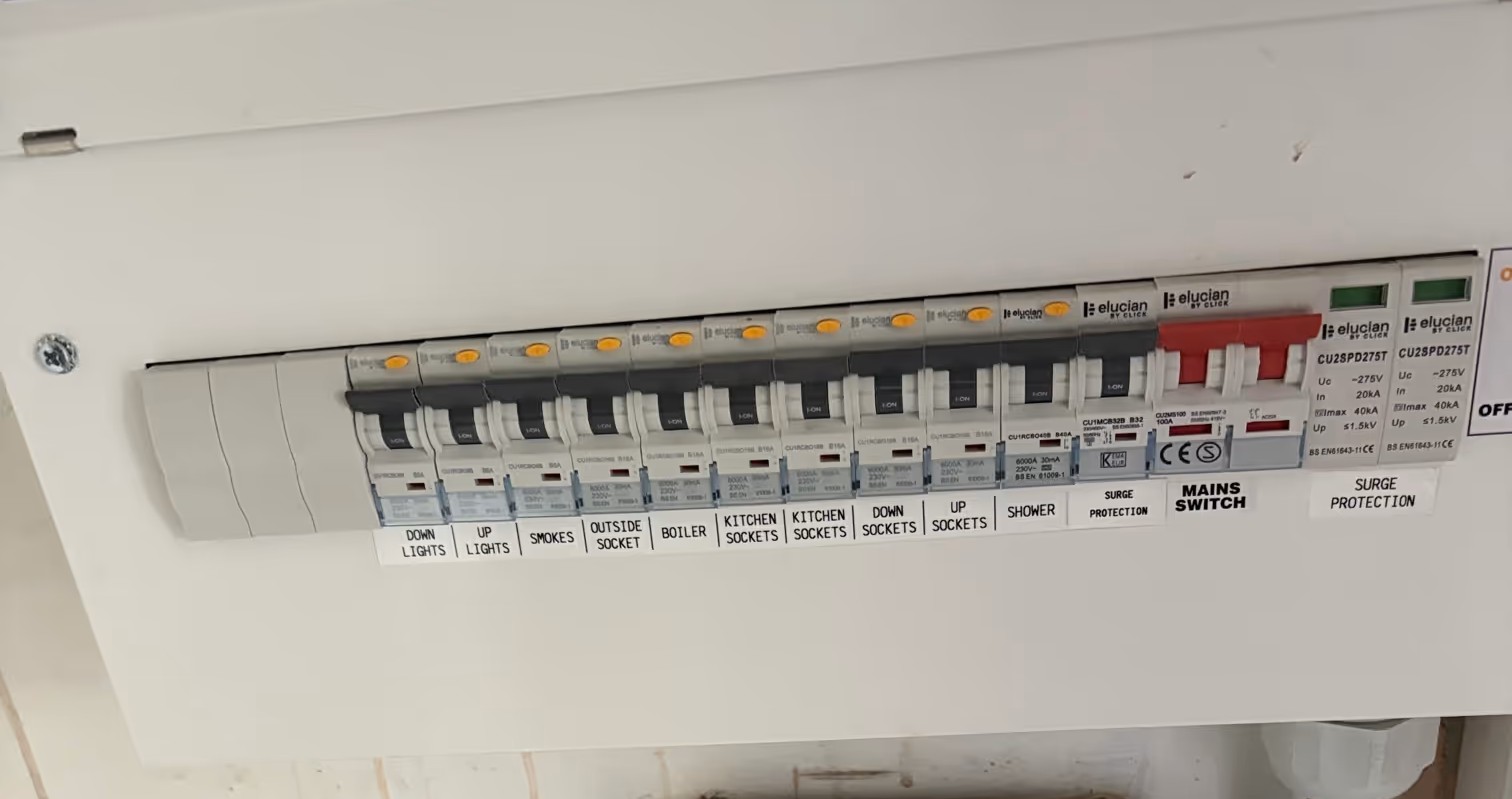
My recommendation was to replace the split-board arrangement with a modern consumer unit using individual Type A RCBO protection.
That would mean each circuit had its own protection rather than several circuits relying on one shared RCD.
It would also reduce the problems caused by cumulative leakage from several circuits all acting on one RCD.
For me, the installation had reached the point where the way the house was being used had moved beyond what the original split-board arrangement was designed around.
What Did the Customer Decide?
After I had explained what was happening, the customer understandably looked at the cost of replacing the consumer unit and decided she did not want to spend the money on the upgrade at that time.
Her thinking was quite simple.
If they used too much equipment and the RCD tripped, they would reduce the amount of equipment being used and reset the RCD.
I explained why I did not see that as a safe long-term solution.
Repeated tripping is telling you that something needs looking at properly.
It should not simply become part of how the house is used.
Why Was I Concerned About Simply Resetting the RCD?
The existing protection was a Type AC RCD supplying circuits with a large amount of modern electronic equipment.
Electronic equipment can produce DC components in the residual current.
Those DC components can affect the way a Type AC RCD operates and can potentially desensitise or blind it.
That is the part a homeowner may not be able to see.
Everything in the house could appear to be working normally.
The lights may still come on.
The sockets may still work.
The shower may still operate.
But if the RCD is being affected by DC residual current, there is a risk that it may not operate correctly when a genuine fault occurs.
The MCBs would still provide overcurrent protection, but an MCB does a different job from an RCD.
It does not provide the same additional protection against electric shock.
That was particularly important in this property because the shared RCD was also protecting the bathroom and shower area.
So my advice was not simply:
“Use less equipment and reset it when it trips.”
The repeated tripping was an indication that the installation needed proper attention.
Why Would Individual RCBOs Have Helped?
With individual RCBO protection, each circuit has its own 30 mA residual-current protection.
That means the leakage from the converted garage would not be added to the leakage from several other circuits before reaching one shared RCD.
If the music equipment caused excessive leakage on that particular circuit, that circuit would be the one affected.
The rest of the house would not need to lose power simply because of what was happening in one area.
That is one of the main reasons I moved away from split boards.
Years ago, they were my normal choice.
Today, with the amount of electronic equipment we have in our homes, I prefer every circuit to have its own suitable Type A RCBO protection.
My View on Modern Consumer Unit Upgrades
For me, a consumer unit upgrade is not just about replacing an old box with a newer one.
It is about looking at how the house is actually being used.
How many electronic devices are connected?
How many circuits are sharing one RCD?
What type of protection is currently fitted?
Is the customer likely to add more electrical equipment in the future?
These things matter.
That is why I no longer fit split-board consumer units.
If I am replacing a board, my preference is individual RCBO protection, with the protective devices selected to suit the actual circuits and the way the customer uses the property.
Check out our bother blog:
Do I Need Bidirectional RCBOs for Plug-In Solar?
Consumer Unit Upgrades in Morley
If your electricity keeps tripping, or you have an older split-board consumer unit and you are not sure whether it is still suitable for the way your home is being used, I can take a look and explain the options in straightforward terms.
If you are looking for a consumer unit upgrade in Morley, a fuseboard electrician in Morley or an electrician in Morley, call Glynn on 0113 403 1300 or contact GFS Electrical.