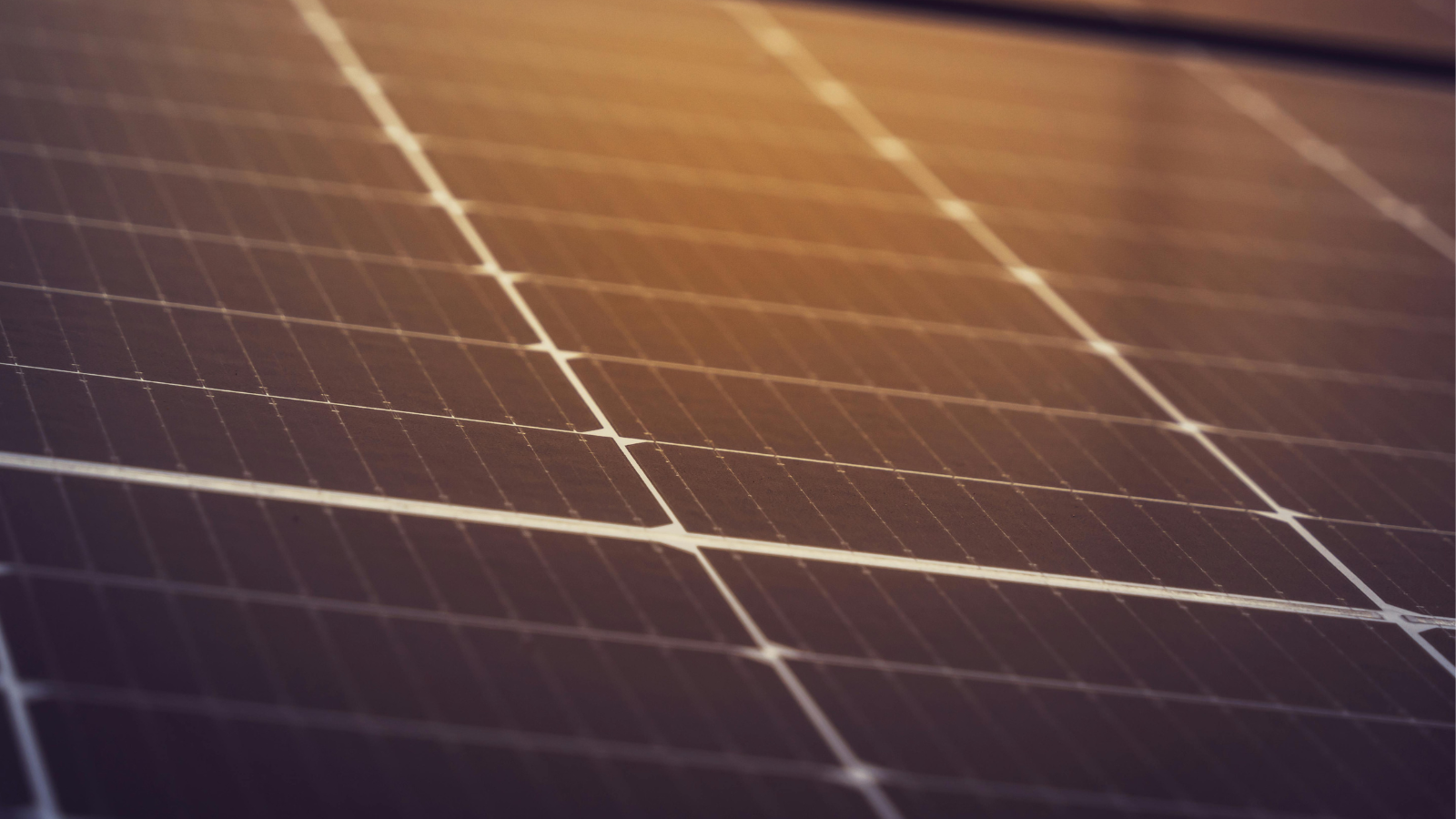
There has been a lot of discussion recently about plug-in solar panels.
Are they safe?
Can you really generate electricity and feed it into your home through a socket?
And if you are having a new consumer unit fitted now, should you be thinking about plug-in solar even if you don't own a system yet?
This became a real question for me when I went to see my uncle about upgrading his consumer unit.
He had been travelling in Europe and had seen plug-in solar systems being sold in supermarkets.
He felt it would only be a matter of time before they became available here and was interested in trying them.
For him, plug-in solar wasn't necessarily intended to replace a full rooftop solar installation.
He saw it as a possible stepping stone.
Start with a smaller system, generate some of his own electricity and see how he gets on.
If he liked the results, he might eventually decide to invest in a full solar PV system for the property.
That conversation immediately made me think differently about how I should specify his new consumer unit.
Are Plug-In Solar Panels Coming to the UK?
The position has moved very quickly.
The UK Government announced that plug-in solar systems became legal to buy and use across Great Britain from 27 August 2026, with systems producing up to 800W. The government is also continuing work on the detailed safety and product framework around the technology.
So my uncle was right to think this was something homeowners would soon be considering.
For me as an electrician, that means it is worth talking about when I am installing a consumer unit that could remain in somebody's home for many years.
Why Does Plug-In Solar Affect the Consumer Unit?
Traditionally, we tend to think of electricity in a house as travelling in one direction.
It comes into the property, passes through the consumer unit and travels out along the circuits towards the lights, sockets and appliances.
Plug-in solar changes that.
A plug-in solar system becomes another source of electricity on the circuit.
So power can potentially travel back through the circuit towards the consumer unit rather than only travelling away from it.
That means I need to consider whether the protective device on that circuit is designed for power flowing in either direction.
What Is a Bidirectional RCBO?
A bidirectional RCBO is a protective device designed by the manufacturer to be suitable where the source of supply may be connected to either side of the device.
That is different from a unidirectional protective device, where the manufacturer specifies particular line and load connections.
So when I know electricity may flow in both directions, I want to make sure the protective device is suitable for that arrangement.
Why Am I Using Bidirectional RCBOs at My Uncle's House?
Because we already know plug-in solar is something he is genuinely interested in.
When I upgrade his consumer unit, I don't want to look only at what he has connected today.
I want to think about what he may realistically connect in the next few years.
For the socket circuits which may be used for plug-in solar, my preference is therefore to install suitable Type A bidirectional RCBO protection.
For me, that is a sensible part of future-proofing the consumer unit.
I would rather make that decision while the board is being replaced than install a brand-new consumer unit and potentially have to change protective devices again shortly afterwards.
Is Bidirectional RCD Protection Recommended for Plug-In Solar?
Electrical Safety First currently recommends that households have at least a Type A bidirectional RCD protecting circuits intended for plug-in solar.
It also recommends having the electrical installation assessed by a competent electrician before purchasing or using one of these systems.
That is an important point.
The word "plug-in" can make the technology sound as though you simply buy a panel, find any socket and plug it in.
I don't think homeowners should assume that.
The existing circuit and its protective devices still need to be suitable.
Can I Use Plug-In Solar If I Have an Older Type AC RCD?
This is something I would be particularly careful about.
A lot of older consumer units contain Type AC RCDs.
Electrical Safety First currently advises that homes with Type AC RCDs should not use plug-in solar on those circuits without first upgrading to at least suitable Type A bidirectional RCD protection.
That is because plug-in solar inverters can introduce residual DC components which older Type AC devices were not designed to deal with.
So if somebody calls me about plug-in solar and I find an older Type AC RCD, that is something I would want to assess before they start using the system.
Do All My Socket Circuits Need Bidirectional RCBOs?
Not necessarily.
I don't think the answer is simply:
"Plug-in solar exists, so make every RCBO in the house bidirectional."
I prefer to look at how the customer intends to use the property.
In my uncle's case, plug-in solar is already part of the conversation.
So I can identify the socket circuits which may realistically be used and select the protective devices accordingly.
For another customer with absolutely no interest in solar or other generation, the design could be different.
That is why I think consumer-unit upgrades should be designed around the individual home rather than simply fitting the same populated board everywhere.
Is a Bidirectional RCBO All I Need?
No.
This is probably the most important safety point in this article.
Installing a bidirectional RCBO does not automatically mean that any socket circuit is suitable for plug-in solar.
The final circuit itself also needs considering.
Electrical Safety First has highlighted potential issues including interaction with RCDs and how power from plug-in solar is injected into existing radial or ring final circuits.
That is why I would want to assess the installation rather than simply changing an RCBO and saying the job is finished.
Plug-in solar should also not be connected through extension leads, cable reels, multiway adaptors, travel adaptors or plug-in RCD adaptors.
A bidirectional RCBO is only one part of the assessment. The socket circuit itself also needs to be suitable.
Is Bidirectional the Same as Double Pole?
No.
These are two separate features and I think it is useful for customers to understand the difference.
Bidirectional means the protective device is suitable for power potentially flowing in either direction.
Double pole or switched neutral means the device disconnects both the line and neutral of the circuit.
I personally prefer devices which disconnect the neutral where suitable because of the isolation and fault-finding advantages.
But that is a different reason from choosing a bidirectional device.
Could Plug-In Solar Be a Stepping Stone to Full Solar?
That is certainly how my uncle sees it.
He does not necessarily want to jump straight into the cost of a full rooftop PV installation.
He is interested in starting smaller, seeing how much electricity he can generate and then deciding whether a larger solar system makes sense for him.
I suspect other homeowners may think the same way.
For some people, plug-in solar could be their first experience of generating electricity at home.
That means today's relatively simple socket circuits may be used differently in the future.
As an electrician, I think it makes sense to at least ask the question when installing a brand-new consumer unit.
Why Is This Part of Future-Proofing a Consumer Unit?
A new consumer unit could potentially remain in a property for decades.
So when I design one, I don't just ask:
"What does this house need today?"
I also ask:
- Could you have solar?
- Could you have battery storage?
- Might you use plug-in solar?
- Could you install a heat pump?
- Could you have an electric boiler?
- Might you want an EV charger?
I don't believe in selling customers equipment they don't need.
But when somebody already tells me they are interested in a particular technology, I would rather consider it at the design stage.
That is exactly what I am doing at my uncle's house.
Why Does My Choice of Consumer Unit Brand Matter?
This is also one of the reasons I look carefully at the manufacturer of the consumer unit.
I want access to the types of protective devices that I may need today and in the future.
That includes individual Type A RCBOs, switched-neutral options, bidirectional devices and protection for other developing technologies.
This is one of the reasons I tend to favour Hager.
I like the build quality, I consistently see good operating results when I test their protective devices, and I like the range of devices available.
What Did My Uncle's Consumer Unit Upgrade Teach Me?
For me, this job demonstrates why a consumer-unit upgrade should involve a conversation rather than simply swapping one box for another.
If I had only asked what my uncle uses today, plug-in solar would never have entered the discussion.
Because I asked what he may want in the future, I can take that into account when I select the RCBOs for his new board.
Whether he eventually buys plug-in solar or goes straight to a larger solar PV installation remains to be seen.
But when I leave his house after installing the new consumer unit, I want to know that I have at least considered the future technology he has already told me he is interested in.
Click here to read our blog about Why I No Longer Install Split-Board Consumer Units in Morley
Consumer Unit Upgrades in Morley
If you're considering a consumer unit upgrade in Morley and you're also thinking about plug-in solar, full solar PV, battery storage or other future electrical upgrades, tell me before we decide on the final board.
I can look at what you have now, what you may want to add later and select the protective devices to suit the installation.
If you're looking for a fuseboard electrician in Morley, a consumer unit electrician in Morley or an electrician in Morley, call Glynn on 0113 403 1300 or contact GFS Electrical.