Do I Need an Electrical Certificate? Notifiable Work, EICRs & What It Means for Your Home
Do I Need an Electrical Certificate?
Electrical Certificates: Quick homeowner summary
- You should usually expect a certificate when electrical work is carried out
- Not all electrical work is notifiable, but all notifiable work must be certified
- Certificates prove work was tested and is safe
- Missing certificates can cause delays or costs when selling a home
- Keeping certificates can reduce time and cost for future inspections and work
First things first: should I expect an electrical certificate?
In most cases, yes.
If an electrician alters your wiring in your Morley home in any meaningful way, you should expect some form of electrical certification. The type of certificate depends on what work was done.
Think of certificates as proof that safety checks were carried out, not paperwork for the sake of it.
Is electrical work always notifiable?
No – and this is where many Morley homeowners get confused.
Notifiable work is a Building Regulations requirement (Part P), not a certificate type.
Notifiable work usually includes:
- Installing a new circuit
- Replacing a consumer unit (fuse box)
- Certain work in bathrooms or special locations if a new circuit is involved
This has been the case since Part P was introduced in 2005, with the scope reduced in 2013.
If work is notifiable, it must be reported to Building Control – either by the electrician (if registered) or via the council.
Important: Not all certified work is notifiable, but all notifiable work must be certified.
What electrical certificates might I receive?
1️⃣ Minor Electrical Installation Works Certificate
This applies to small changes to an existing circuit, such as: - Adding a socket to a ring circuit - Altering lighting wiring - Installing an extractor fan using an existing supply
This certificate confirms: - The work was tested - The existing circuit was suitable - The work is safe
It’s common, sensible, and often overlooked by less thorough electricians.
2️⃣ Electrical Installation Certificate (EIC)
This is issued for larger or more significant work, such as: - A new circuit - Fuse box replacement - Partial or full rewires
An EIC confirms that the design, installation, and testing meet current wiring regulations.
If the work is notifiable, the EIC is backed up by a Building Regulations Compliance Certificate.
3️⃣ Electrical Installation Condition Report (EICR)
An EICR is not for new work. It’s an inspection of what already exists.
It’s best thought of as an MOT for your Morley property's electrics.
Homeowners often get an EICR when: - Buying or selling a property - Living in an older home - Renting a property (legally required for landlords)
It tells you whether the installation is safe at the time of inspection.
What if I don’t get a certificate?
This is one of the most important questions.
If you don’t receive certification: - There is no formal proof the work was tested - Problems can arise when selling your home - Solicitors may request missing certificates - You may need to pay for an indemnity policy or retrospective inspection
Many Morley homeowners only discover this years later, through no fault of their own.
Can I still sell my house without certificates?
Usually yes, but it may be: - Slower - More stressful - More expensive
Missing paperwork can lead to: - Buyer uncertainty - Negotiation issues - Last-minute inspections
Having certificates simply removes friction from the process.
Do electrical certificates reduce future costs?
Certificates don’t reduce energy bills directly – and it’s important to be clear about that.
What they do provide is confidence that electrical work has been: - Designed correctly - Installed properly - Tested and recorded
That matters because well-documented electrics: - Are easier and quicker to work on in the future - Reduce guesswork and investigation time - Help faults be identified earlier
Over the lifetime of a home, this often means less disruption, fewer repeat visits, and lower labour costs when further electrical work or inspections are needed.
So while certificates don’t make electricity cheaper to use, they can make your home cheaper and easier to maintain.
Are there benefits for me as a homeowner?
Yes – and they’re practical ones:
- Peace of mind
- Clear safety records
- Easier future alterations
- Better support from insurers
- Less stress during house sales
Certificates act as a history of your home’s electrics.
Does certification benefit the electrician too?
It does – and that’s a good thing for you.
A properly registered electrician: - Is independently assessed - Carries the correct insurance - Takes responsibility for their work - Can be held accountable if needed
This protects both sides and raises standards across the industry.
The simple rule of thumb:
If you’re ever unsure, ask:
• What certificate will I receive?
• Is this work notifiable?
• Will Building Control be notified?
A professional electrician will explain this clearly – without jargon.
Do electrical certificates save time and reduce future costs?
Yes – and this is one of the most overlooked benefits of proper electrical certification.
Certificates don’t just prove work was done safely at the time. They also create a history of your home’s electrics, and that history has real, practical value.
How existing certificates can reduce the cost of an EICR
If you already have Electrical Installation Certificates (EICs) or Minor Works Certificates for circuits in your home, an electrician carrying out an EICR can:
- See how and when circuits were installed or altered
- Understand the original design and test results
- Focus time on checking condition rather than guessing layout
This can: - Reduce investigation time - Avoid unnecessary dismantling - Make faults easier to identify
In simple terms, less time spent tracing and questioning means lower inspection time, which can reduce the overall cost of an EICR.
How an EICR can reduce the cost of future electrical work
The same works in reverse.
If you already have a recent EICR for your Morley home and later decide to: - Add sockets - Alter lighting - Install new equipment
The electrician can use the EICR as a reliable reference point.
This means: - Less time re-checking existing circuits - Clear confirmation that the supply and protection are suitable - Faster, more confident Minor Works certification
That efficiency often translates into reduced labour time and cost.
Why a paper trail makes faults more obvious
One of the biggest advantages of having certificates is context.
With previous certification to refer to, an electrician can: - Compare past test results with current readings - Spot changes that suggest deterioration or damage - Identify patterns that wouldn’t be obvious from one test alone
This makes potential faults: - Easier to diagnose - Quicker to locate - Less disruptive to resolve
Without history, electricians are often forced to work blind.
The bigger picture for Morley homeowners
Good electrical records: - Save time - Reduce guesswork - Lower future costs - Improve fault-finding - Make homes easier to maintain and sell
Certification isn’t just about today’s job – it’s about making every future job simpler, safer, and more cost‑effective.
Why testing still matters – even for experienced electricians
I’ve been an electrician for many years, and there’s something important homeowners should know.
When you do a job day in, day out, it’s very easy – for any electrician – to become focused on efficiency. You know the job, it looks straightforward, and visually everything appears correct.
That’s exactly why testing matters.
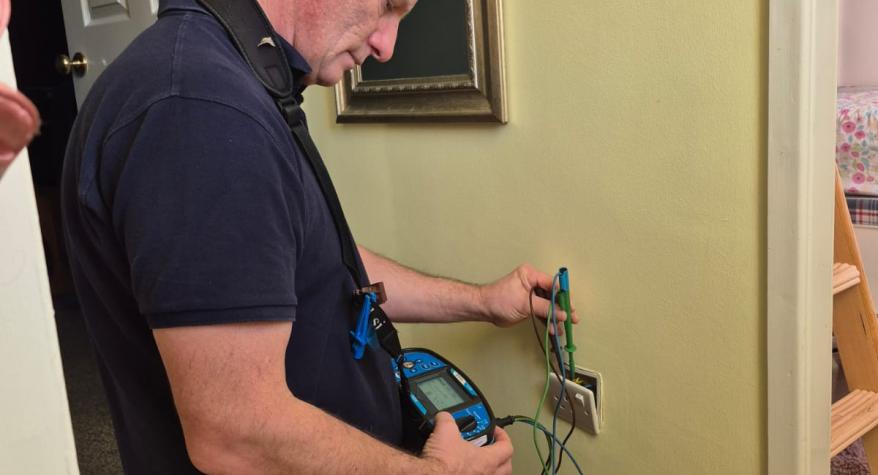
Testing isn’t about mistrust or box‑ticking. It’s about confirming that what looks safe actually is safe.
Why visual checks alone aren’t enough
A lot of electrical safety features are invisible. A circuit can look perfectly fine: - The light works - The metal fitting is connected - The earth wire appears to be in place
But without testing, you don’t actually know whether that safety path works back to the consumer unit.
I’ve seen this first-hand.
“Electrical work can look safe — testing proves whether it actually is.”
A real example: when testing caught a hidden danger
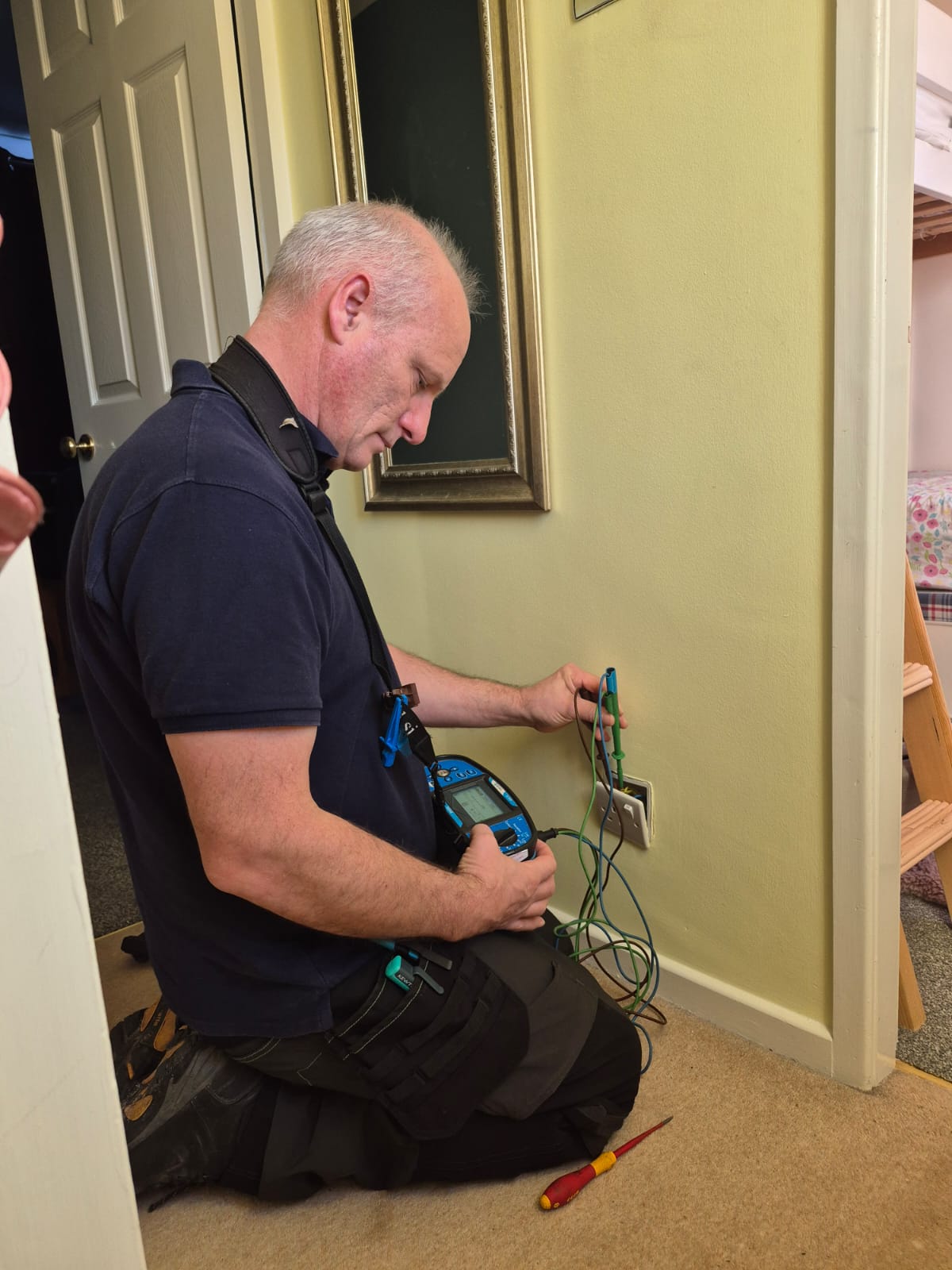
While fitting a simple light, everything appeared correct visually. Before completion, I carried out the required tests.
The result showed that the earth did not return back to the consumer unit.
In other words, the safety feature looked present but offered no real protection at all. Without testing, it would have remained that way for years – a hidden risk no one would ever notice until something went wrong.
That fitting was, in practical terms, no safer than having no earth connection at all.
Why final testing matters – even after the job looks finished
Another situation I regularly guard against happens right at the end of a job.
You can complete all your tests, assemble the light fitting, secure it to the ceiling – and that final movement is exactly when a conductor can: - Loosen - Pull slightly - Or even snap inside a connector
Visually, nothing changes. The light still works.
That’s why, before packing up, I always confirm that the metalwork is still correctly protected. A quick final test confirms that the safety system hasn’t been compromised during installation.
What this means for Morley homeowners
Testing is what turns electrical work from something that appears fine into something that is proven safe.
If you’d like to understand this in more detail, please reach out.
It ensures that: - Safety systems actually work - Hidden faults are discovered early - Certification can be issued with confidence
Many serious electrical faults don’t cause immediate problems. They sit quietly for years. Testing is often the only way they’re ever found.
Electrical Certificates, a Final thought
Electrical testing isn’t about slowing jobs down or creating paperwork. It’s about professionalism, accountability, and safety.
For Morley homeowners, a certificate means more than a document. It’s evidence that someone didn’t just rely on experience or eyesight – they proved the installation was safe.
That’s what good electrical work should look like.
Who can issue an electrical certificate?
Qualifications, insurance, and experience – why this matters
When an electrician issues certificates and testing results, they are taking professional responsibility for the safety of your home.
I carry indemnity insurance and hold a City & Guilds qualification in inspection, testing, and commissioning, alongside many years of hands‑on experience in domestic electrical work.
That combination matters because it means: - Testing is carried out properly, not rushed or assumed - Results are understood, not just recorded - Certificates are issued with confidence and accountability
For Morley homeowners, this provides reassurance that the work has been checked, proven, and professionally backed, not just completed and left working.
What should you do next?
If you’re planning electrical work, arranging an inspection, or simply unsure what certification applies to your home, a short conversation can save time, confusion, and unnecessary cost later.
I’m always happy to explain: - Whether work is notifiable - What certificate you should expect - How existing certificates or reports may help
This way, you know exactly what to expect before any work starts.
Get in touch for clear, professional advice